Surprising Insights On Acoustic Foam Showdowns For Home Studios
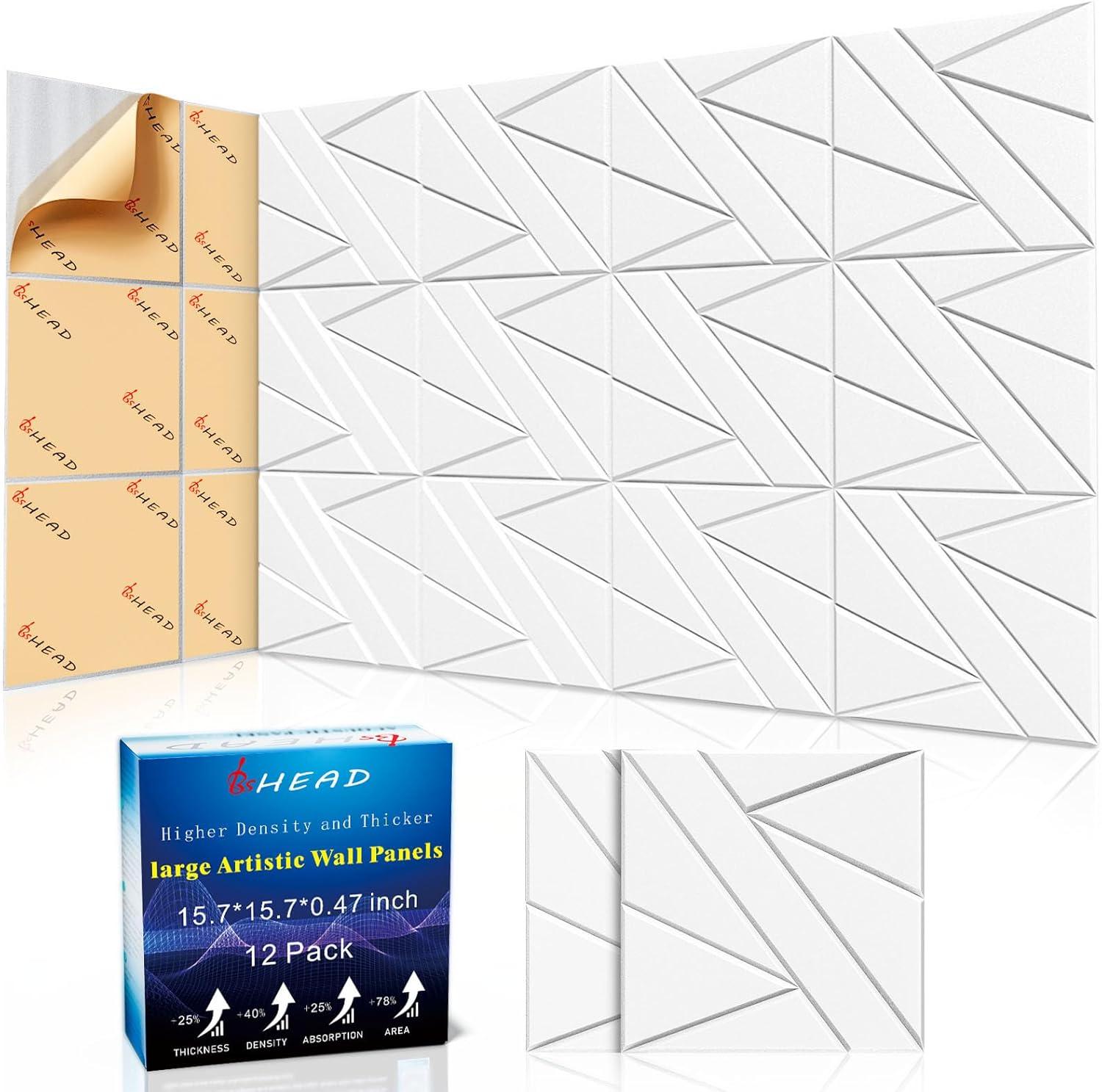
Selecting the right acoustic treatment for a home studio often feels like navigating a jungle of specifications and claims. Delving into options like the 12 Pack Self-Adhesive White Panels, known for their large 15.7×15.7-inch footprint and 0.47-inch thickness, reveals a significant consideration: surface area versus wall integration. Their high density (1.2lb/ft³) promises effective sound absorption, but the large, individual panels require careful layout and a confident assessment of one’s adhesive application skills for a seamless look.
Contrasting this, the 24 Pack Red Acoustic Panels (1x12x12 inches) immediately stand out for their sheer volume, offering numerous placement possibilities even at a smaller size. Engineered with fire resistance and available in a bold accent color, these smaller panels offer a more granular approach to noise dampening, potentially filling gaps more flexibly, though at the cost of some surface coverage per panel.
Herein lies a fascinating dichotomy: the BXI Black Self-Adhesive Panels (1-inch Egg Crate Foam) introduce another dimension entirely. Simultaneously a visual statement with their bold “egg crate” texture and practical offering, these panels facilitate easier thermal insulation in addition to noise reduction. The note about closed-cell foam adds intriguing weight, suggesting superior water resistance compared to open-cell types, a quality not always highlighted upfront. This panel’s uniform sizing (8 pack of 16×12 inches) might offer a more consistent application experience than the jumbo or tiny panels previously mentioned.
Even away from floor or wall mounts, unique solutions like the KGORGE Blackout Curtains challenge traditional wisdom about acoustic treatment. Boasting four layers and cited energy efficiency properties, these curtains can plausibly affect a room’s acoustic signature by managing low-frequency tone reflection from windows – a surprisingly subtle yet potentially significant contributing factor to a studio’s sound environment. Comparing these diverse solutions reveals that the “best” choice isn’t merely about NRC ratings; it’s deeply entwined with budget, aesthetic preference, specific room layouts, and even unforeseen acoustic dynamics like window transmission loss.